From the Palaeozoic Age to Modern Art
Oskar Schlemmer and Otto Dix, the history of the city and of civilisation, ethnology and natural history – Stuttgart's museums offer an amazing diversity. There are two marvellous art galleries in the heart of town, just a few minutes' walk from each other. Visitors can also delve into the history of the city and the state of Baden-Württemberg in museums around the city centre.
Stuttgart State Gallery
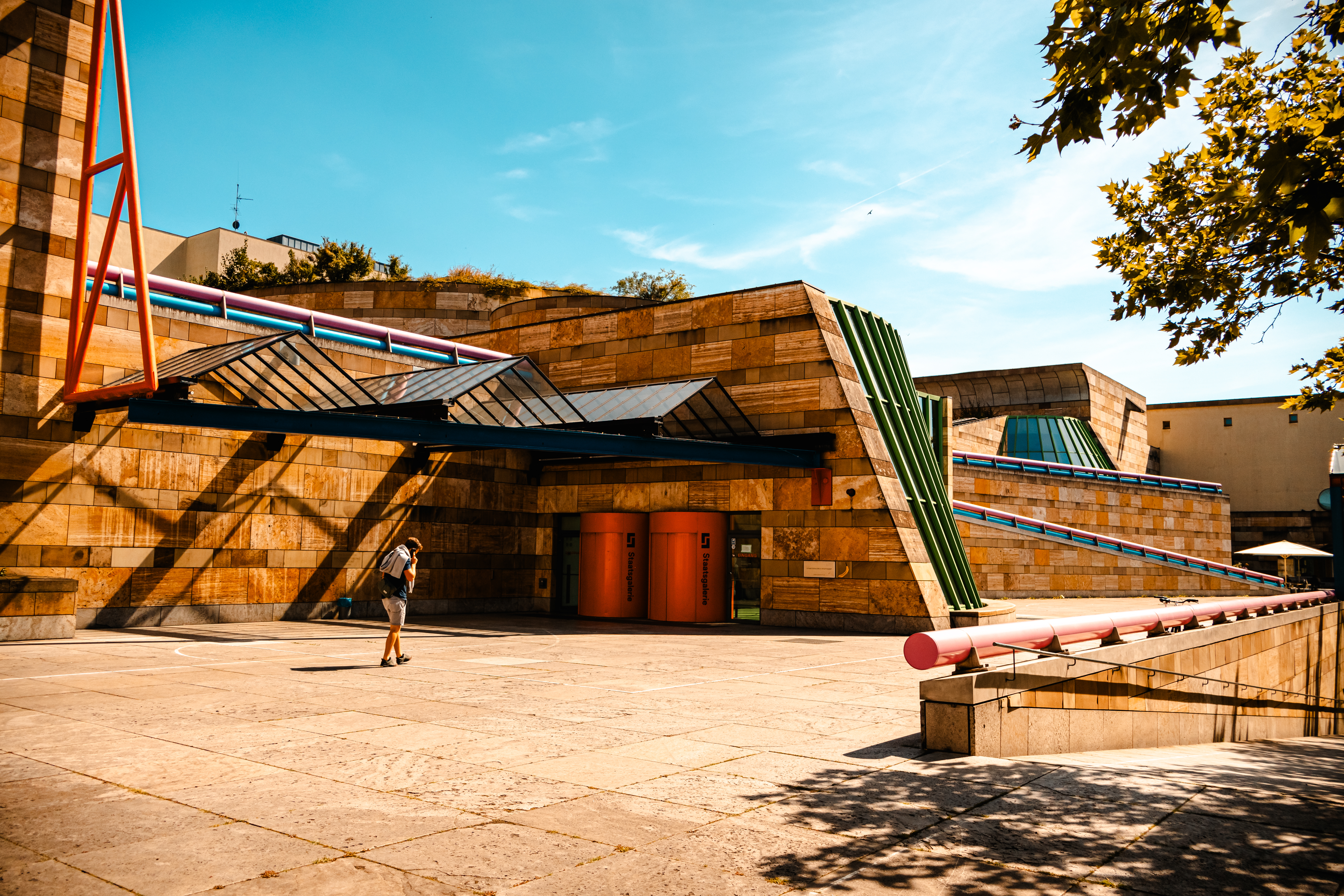
The Stuttgart State Gallery is a museum of world renown. With its extensive collections of masterpieces from the 14th century up to the present day, it is one of Germany's most popular museums. The first-class works on show cover an exhibition area of some 12,000 square metres. Special highlights include Oskar Schlemmer's "Figurines for the Triadic Ballet", Henri Matisse's famous "Nude from the Back", Picasso's sculpture ensemble "The Bathers", and the Joseph Beuys Room, which was installed by the artist himself. The permanent collection presents works of Early German, Italian and Netherlandish art, as well as of Swabian Classicism. The State Gallery's main focus is on Classic Modernism, with works from 1900 bis 1980. The earliest part of the building, the Old State Gallery, was built as a three-winged complex in the style of Classicism between 1838 and 1843, during the reign of King Wilhelm I of Württemberg, making it one of the oldest museum buildings in Germany. Adjoining the Old State Gallery is the extension of the New State Gallery, a masterpiece of Postmodernist architecture dating from the year 1984 and designed by the star architect Sir James Stirling.
For more information, please visit: www.staatsgalerie.de/en
Stuttgart Museum of Art
The Stuttgart Museum of Art is a work of art in its own right. By day the impressive, 26-metre-high glass cube stands out on Palace Square, while at night it sets its square stone core aglow, lighting up the whole square. A large part of the 5,000-square-metre exhibition area, which was designed in 2005 by the Berlin architects Hascher + Jehle, is housed in a disused tunnel system. The collections of the Stuttgart Museum of Art comprise more than 15,000 exhibits dating from the end of the 18th century to the present day, from Swabian Impressionism to contemporary art. The Museum of Art also boasts an outstanding collection of the oeuvre of Otto Dix, with some 250 items. In contrast to the figurative painter Dix, the Museum of Art also owns more than 500 works by Fritz Winter. In addition to classics of contemporary art, works by a younger generation of artists, including Martin Creed, Rebecca Horn, and Annette Kelm, span the years up to the present day. The permanent collection is on display on the two levels of the tunnel system, while the glass cube is reserved for major temporary exhibitions.
Museum of the Year 2021: The German section of the International Association of Art Critics AICA (Association Internationale des Critiques d'Art) named in February 2022 the Stuttgart Art Museum as “Museum of the Year 2021”.
Due to renovation works, Kunstmuseum Stuttgart will be temporarily closed from 13 April 2026 until early 2027. During the construction period, the museum will remain present with an exhibition at the Kunstgebäude on Schlossplatz — the very building that housed the City of Stuttgart’s art collection from 1961 to 2005.
For more information, please visit: www.kunstmuseum-stuttgart.de/en
StadtPalais – Museum for Stuttgart
The StadtPalais in what used to be King Wilhelm's Palace – the residence of Wilhelm II, the last king of Württemberg – is dedicated to the city and its history. How did Stuttgart become what it is today? Which important impulses influenced the city’s development? And where does its future lie? Its exhibits include collectors' items that document the city's past – from shop signs and advertisements to protest banners and the panda mask of the rapper Cro.
The hub of the permanent exhibition “Stuttgart (Hi)stories” is a medially recorded model of the city, where so-called “Tales of the Town” take visitors back, step by step, through Stuttgart's past, while giving them the opportunity to review its history from many different perspectives. Two “Century Rooms” present the city's history in chronological order from the mid-18th century onwards. The 19th century spotlights its development from a minor royal capital to an industrialised metropolis. The 20th century is defined by the emergence of democracy, the devastation and reconstruction during and after the Second World War, and a city shaped by migration.
For more information, please visit: www.stadtpalais-stuttgart.de
Württemberg State Museum
The Württemberg State Museum is not only one of the oldest state-run museums in Baden-Württemberg, it is also the Baden-Württemberg's largest historico-cultural museum. Since 1949 its collections have been on display in Stuttgart's Old Palace, the former residence of the dukes of Württemberg. In 1862 the predecessor institution of today's Württemberg State Museum, the "Royal State Collection of National Art and Antiquities", was founded by King Wilhelm I.
Today's Württemberg State Museum also comprises the collection of historic musical instruments in the Stiftsfruchtkasten (Old Granary), the Museum of Everyday Life in Waldenbuch Castle and other subsidiary museums elsewhere in the state. At the children's museum “Junges Schloss” , children from the age of four can learn about local culture and history in a child-oriented way with alternating exhibitions. The exhibition "LegendäreMeisterWerke. Kulturgeschichte(n) aus Württemberg" ("Legendary Masterpieces. Cultural (Hi)stories from Württemberg") has more than 1,500 items on display, from Ice Age art up to the end of the Kingdom of Württemberg in the early 20th century. The second exhibition, "Wahre Schätze. Antike – Kelten – Kunstkammer" ("True Treasures – Antiquity – Celts – Cabinet of Curiosities"), combines three world-class collections, giving fascinating insights into the advanced civilisations of the Mediterranean region, Early Celtic princely seats and burial sites, and the art treasures of the dukes of Württemberg.
For more information, please visit : www.landesmuseum-stuttgart.de/en
House of History
The House of History on Stuttgart's “culture mile” documents over 200 years of the history of the state of Baden-Württemberg, from Napoleon to the Stuttgart 21 construction site. It was inaugurated in 2002 as Germany's first politicohistorical regional museum. The permanent exhibition "The German Southwest from 1790 to the Present Day" brings to life the history of the state in sophisticated presentations. The leitmotif of the chronological section of the exhibition is “Democratisation and Participation”, ending with “Here and Now” in the Museum of the Present Day, which presents a broad spectrum of contemporary topics in Baden-Württemberg, ranging from the FIFA World Cup to the Stuttgart 21 rail project.
For more information, please visit: www.hdgbw.de/english
Hotel Silber
December 2018 saw the opening of the “Hotel Silber” in Stuttgart’s Dorotheenstraße 10. For decades this building was the headquarters of the police, and during the National Socialism era of the Gestapo in Stuttgart. The permanent exhibition focuses on the perpetrators and their victims, on the police as an institution and its role in three different political systems. It illustrates the consistencies and inconsistencies in its dealings with minorities and opponents, its actions, and also the self-image of the respective police officials in the course of democracy and dictatorship. Original exhibits, documents, pictures and other media convey a differentiated picture of the offenders and illustrate the effects of their deeds on their victims. This civic participation project of the state of Baden-Württemberg and the state capital of Stuttgart is under the authority of the Baden-Württemberg House of History.
For more information, please visit: www.geschichtsort-hotel-silber.de
bibliorama – the Stuttgart Bible Museum
Initiated by the Evangelische Landeskirche (Protestant Church of Württemberg), “bibliorama” presents a modern museum concept where visitors are encouraged to take an active part. With lots of opportunities to join in and experiment, the museum invites encounters with the Bible. Compose a psalm and send it by e-mail, or play a laser harp: the museum is your stage. Various biblical characters lead visitors into the stories of the Old and New Testaments and the lives of Luke, Sophia and David, creating a bridge from Eve's Garden of Eden to the Revelation of St. John.
For more information, please visit: www.bibelmuseum-stuttgart.elk-wue.de